Muscle recovery • DOMS
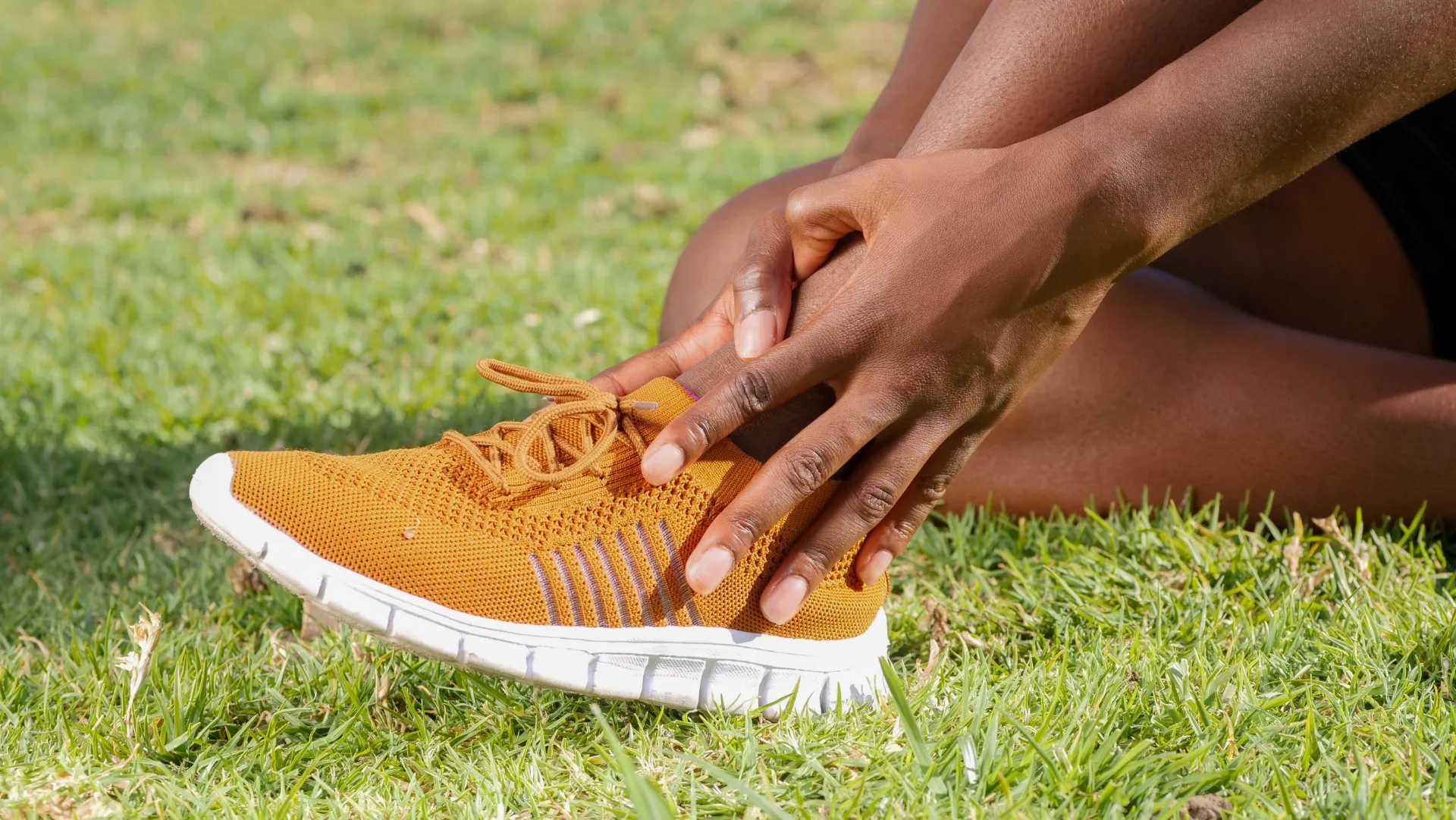
Muscle soreness after exercise: what really happens in the muscles?
They often arrive the next day, sometimes 48 hours later. Yet, muscle soreness remains surrounded by misconceptions.
CryoBliss • Tips & Recovery
Muscle soreness after exercise: why does it occur?
A more intense workout than usual, getting back into sports after a few weeks off, or a new exercise… and the next day, every staircase suddenly becomes much more difficult.
Muscle soreness is one of the most familiar sensations among athletes.
However, their origin often remains poorly understood. They are still sometimes attributed to "lactic acid," although this explanation is now outdated.
So what actually happens in our muscles after exercise? Why do muscle soreness sometimes only appear the next day? And above all, what can we do to support recovery?
What is muscle soreness, or DOMS?
In scientific literature, muscle soreness is generally referred to by the acronym DOMS, for Delayed Onset Muscle Soreness : delayed onset muscle pain.
The important word is precisely "delayed".
Unlike pain felt during exercise, muscle soreness usually appears several hours after exertion. It can become particularly noticeable 24 to 72 hours after training, then gradually decrease.
They occur mainly when the muscle is subjected to an effort to which it is not accustomed.
This is why they are common after resuming sports, a significant increase in intensity, or the introduction of new exercises.
Why do some exercises cause more muscle soreness?
Not all movements engage the muscles in the same way.
Eccentric contractions are particularly known to cause muscle soreness.
An eccentric contraction occurs when the muscle produces force while lengthening.
- go down the stairs; ;
- run downhill; ;
- control the descent of a load; ;
- perform some lunge movements; ;
- slow down part of the movement during an exercise.
This type of effort can cause more disruption to muscle structures when it is unusual.
This is precisely why researchers regularly use eccentric exercises when they want to experimentally induce DOMS. Several photobiomodulation studies selected by CryoBliss use this very model.
No, muscle aches don't come from lactic acid.
This is probably the most persistent misconception.
After intense exertion, lactate levels can indeed increase. However, this does not explain the pain that appears the following day or the day after.
Muscle soreness is more associated with the consequences of unusual exertion on muscle structures and the subsequent biological responses.
So if you have sore legs 48 hours after your workout, it's not "lactic acid stuck in the muscles".
Does having a lot of muscle soreness mean that the workout was effective?
Not necessarily.
Muscle soreness mainly shows that the muscle has been subjected to a stimulus to which it was relatively unaccustomed.
When you regularly repeat the same type of exercise, they also tend to become less significant.
This does not mean that your training becomes ineffective.
More pain ≠ more progress.
Intentionally seeking to have muscle soreness after every workout is therefore not a relevant objective.
Is it possible to play sports with muscle soreness?
It all depends on their intensity and the planned activity.
With mild muscle soreness, gentle activity can usually be considered depending on how you feel.
On the other hand, if a muscle group remains particularly sensitive and your next session is going to work it intensely, reducing the load or allowing more recovery time may be relevant.
It is also important to distinguish between muscle soreness and an injury.
Sudden, highly localized, unusual or persistent pain should not automatically be considered a simple normal consequence of training.
How long do the muscle aches last?
There is not a single duration that applies to everyone.
The intensity of the effort, the type of exercise, the level of training and the habit of the movement influence their evolution.
They can appear in the hours following exertion, be particularly present between 24 and 72 hours, then gradually decrease.
After a very demanding competition or an important comeback, the sensations can sometimes last longer.
How to recover best after an intense workout?
No technique can instantly erase the consequences of a difficult workout.
The fundamentals remain simple:
- Get enough sleep. Sleep remains an essential element of recovery.
- Stay hydrated. The needs increase particularly with the duration of the effort, perspiration and heat.
- Eat enough. The body needs energy and nutrients to support recovery.
- Adapt the following training. Good programming alternates constraints and leaves enough time for the body.
Various recovery techniques can then be added to these fundamentals.
Cryotherapy and muscle aches: what are the benefits?
Whole-body cryotherapy is notably used in the sports world for recovery after significant exertion.
It consists of briefly exposing the body to intense cold.
Research on cold therapy strategies has focused in particular on their influence on delayed onset muscle soreness and the perception of recovery.
Cryotherapy can therefore be integrated into a routine after a particularly demanding workout or competition.
However, it should not be presented as a way to "eliminate" muscle soreness: it accompanies a recovery that remains multifactorial.
At CryoBliss, whole body cryotherapy is performed in an electric cabin without nitrogen, with a short exposure to cold.
Red light and muscle aches: what do studies show?
Photobiomodulation using red and near-infrared light is another approach being studied in the context of DOMS.
A systematic review and meta-analysis published in 2025 compiled 14 studies on photomodulation after exercise that caused muscle soreness. The wavelengths used ranged from 660 to 950 nm.
Based on the available data, the authors report a statistically significant reduction in perceived pain at 72 hours, as well as improved muscle strength recovery. They nevertheless emphasize the heterogeneity of the protocols and the need for further research.
Another randomized, double-blind, placebo-controlled trial, conducted on 40 men, observed better preservation of strength, a decrease in DOMS, and lower creatine kinase activity after eccentric exercise in some groups that received phototherapy before exercise.
These results are interesting, but the devices and parameters used in the studies vary and do not guarantee an identical effect with all equipment.
Cold or red light: which should we choose?
The two techniques rely on different mechanisms.
Cryotherapy uses very short exposure to intense cold.
Photobiomodulation uses certain red and near-infrared wavelengths to interact with different cellular mechanisms.
Therefore, one is not simply a different version of the other.
And above all, no technology can replace sleep, nutrition, hydration and a suitable exercise program.
The best way to have less muscle soreness? Regularity.
It may seem paradoxical, but one of the best ways to be less sore after exercise is simply to… train regularly and progressively.
The body adapts to the stresses to which it is exposed.
A movement that causes significant soreness during the first few sessions may cause much less soreness a few weeks later.
The right strategy is therefore not to seek out muscle soreness.
It's about gradually building an organism capable of better tolerating training.
CryoBliss • Paris
Muscle recovery in Paris at CryoBliss
Located near the Arc de Triomphe, CryoBliss offers various approaches that can be integrated into a recovery routine:
Whether muscle soreness follows a return to sport, HYROX preparation, a long run or a competition, recovery is an integral part of training.
Book a session at CryoBliss