Running • Winter recovery
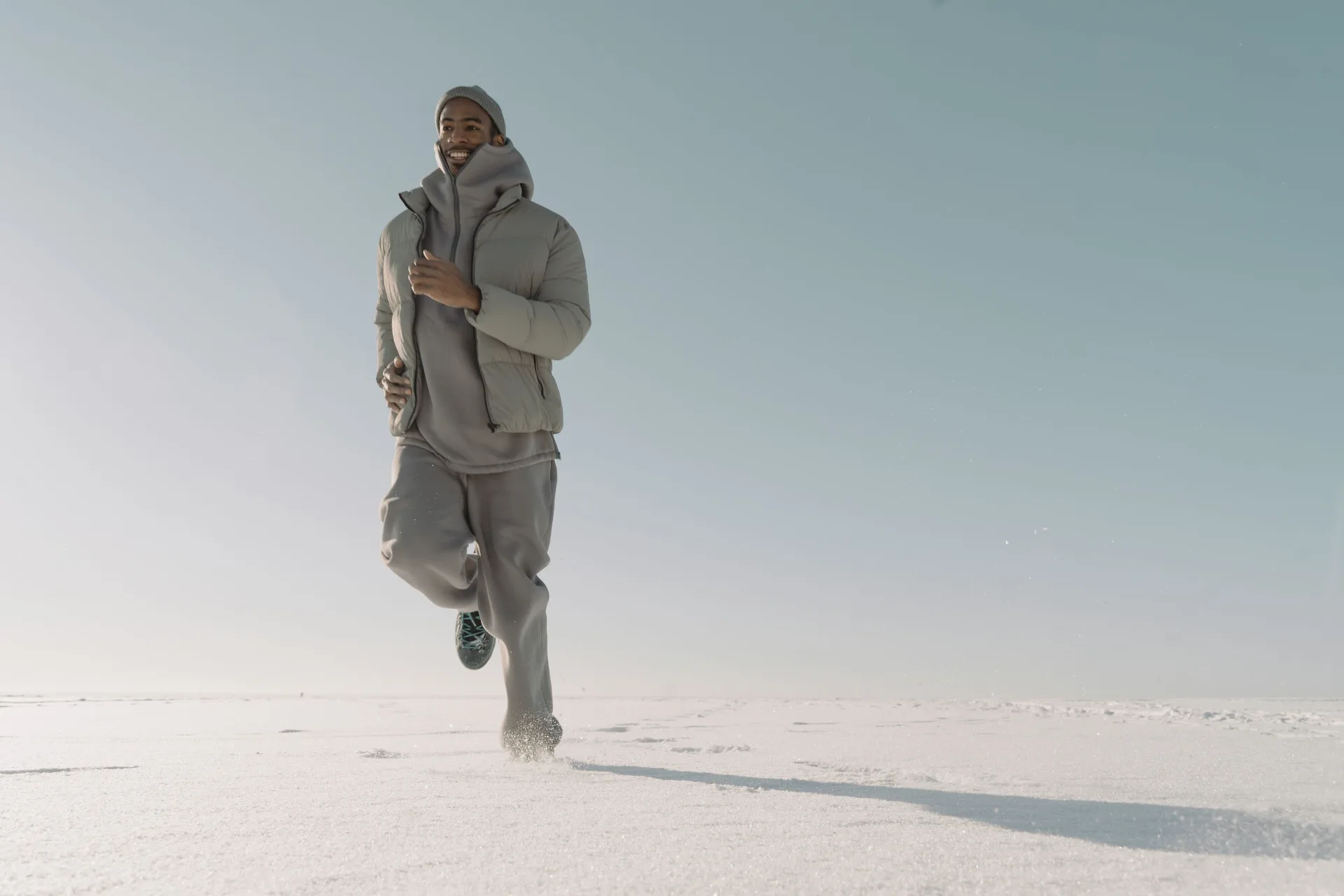
Running in winter: how to recover better when temperatures drop?
The cold weather doesn't mean you can't go running. It mainly requires a few simple adjustments before, during, and after exercise.
CryoBliss • Tips & Recovery
Running in winter: does the cold really change the way you recover?
Lower temperatures, shorter days, rain, wind… The arrival of winter does not necessarily mean putting away your running shoes.
For many runners, it is even an important period: maintaining physical condition, preparing for a half-marathon or starting a training plan for the big spring races.
But running when it's 5°C is not exactly the same as running in June.
Warm-up, clothing, hydration and recovery: a few adjustments allow you to continue running in good conditions during the winter.
Place even more importance on warming up
When it's cold, setting off directly at your usual pace isn't necessarily the best idea.
Warming up allows you to gradually increase your body temperature and prepare your muscles and joints for exertion.
Before a winter outing, you can start with some dynamic movements and then do the first few minutes of running at a more moderate pace.
The more intense the planned training — interval training, hill training or specific pace — the more gradual the increase in intensity should be.
Don't dress too warmly
One of the classic mistakes is dressing according to the perceived temperature before starting to run.
But after a few minutes of exertion, the body produces much more heat.
Overdressing can therefore quickly become uncomfortable and increase perspiration.
The goal is rather to prioritize several layers adapted to the effort, which can be adjusted according to the conditions.
The extremities — hands, ears — are also particularly exposed to the cold.
Continue drinking, even if you don't feel warm.
In summer, remembering to drink water seems obvious. In winter, much less so.
The sensation of thirst may be less present when it is cold, but this does not mean that the body no longer needs water.
Breathing, perspiration under clothing and the duration of the effort continue to contribute to fluid loss.
Hydration therefore remains a component of winter recovery, particularly during long outings.
After the race: do not stay in damp clothes
Once the workout is over, body temperature gradually decreases.
Staying outside for long periods with damp clothes can quickly become unpleasant.
When possible, it is best to change quickly and put on a dry layer, especially after a long or intense outing.
Recovery also begins with these very simple actions.
Why might legs feel stiffer in winter?
It is not uncommon to feel less fluid during the first few minutes of a winter outing.
Cold triggers various physiological responses, particularly in peripheral circulation, and the body must also produce heat to maintain its temperature.
This does not mean that running in winter is bad for the muscles.
On the other hand, this reinforces the importance of a gradual start and a recovery adapted to the actual training load.
Recovery remains essential during winter training.
The main risk is not necessarily the cold itself.
Sometimes it's the accumulation.
A running training program can quickly combine:
- long outing; ;
- fractional; ;
- jogging; ;
- muscle strengthening; ;
- work, transportation and lack of sleep.
However, progress is also built during recovery periods.
Sufficient sleep, a suitable diet and less intense days allow for better management of the succession of training sessions.
And this principle remains the same regardless of the season.
Is it logical to undergo cryotherapy when it's already cold outside?
The question often comes up in winter.
Yes, because walking outside when it is 5°C and undergoing a whole-body cryotherapy session are two completely different exposures.
At CryoBliss, whole body cryotherapy consists of a very short exposure — usually a few minutes — in an electric cabin that can reach approximately -90°C.
The protocol is therefore very different from prolonged exposure to outdoor cold.
Cryotherapy is being studied particularly in the sports field for its use in post-exercise recovery and muscle sensations.
This allows it to continue to be integrated into a winter recovery routine, just like during the rest of the year.
Running and pulse therapy: another approach for the legs
After a long run or a week full of kilometers, some runners primarily seek a feeling of lighter legs.
Stendo® pulse therapy is based on pressures applied to the body and synchronized with the heart rhythm.
It represents a different approach to cryotherapy and can be particularly useful after periods of intense running training.
And what about red and near-infrared light?
Photobiomodulation is also being studied in the field of sports recovery.
Certain red and near-infrared wavelengths interact with different cellular mechanisms, particularly at the mitochondrial level.
Several trials and meta-analyses have focused on its use around exercise, with interesting results concerning muscle soreness and recovery of muscle strength, even if the scientific protocols remain variable.
For runners, it therefore represents another approach that can be integrated into a recovery routine during a training period.
Running in winter to prepare for spring goals
Winter is rarely a slow period for runners.
For many, on the contrary, this is the time when spring goals are set: 10 km, half-marathon, marathon or trail run.
The priority is therefore not simply to successfully complete an outing despite the cold.
The challenge is to be able to string together weeks of training with sufficient regularity.
And for that to happen, recovery and training must go hand in hand.
CryoBliss • Paris
Running recovery in Paris at CryoBliss
Located near the Arc de Triomphe, CryoBliss offers various approaches that can be integrated into a recovery routine for runners:
Whether you're simply running for fun or starting your preparation for a spring goal, winter can be the perfect time to build good recovery habits.
Book a session at CryoBliss